The effective management and engineering of slopes is a critical discipline within geotechnics, particularly in a topographically diverse region like Portsmouth. This category encompasses the comprehensive assessment, design, and implementation of solutions to ensure the stability of both natural and man-made inclines. From the chalk downlands of Portsdown Hill to the engineered embankments supporting our historic coastal defences, understanding slope mechanics is fundamental to public safety, infrastructure integrity, and successful urban development. Our work addresses the risks of landslides, erosion, and rotational slips, which can threaten property, transport corridors, and lives.
Portsmouth's unique geological setting presents a complex interplay of conditions that directly influence slope behaviour. A significant portion of the region is underlain by the Upper Chalk Formation, a soft, porous limestone that can be susceptible to dissolution features and stability issues, especially where it is overlain by superficial deposits of clay-with-flints. Equally important are the areas of the Bracklesham Group and London Clay Formation found on Portsea Island, which present their own challenges. These stiff, over-consolidated clays are prone to softening and strength reduction upon exposure to water, making a meticulous slope stability analysis an essential first step for any project in these materials.
Any geotechnical design in the UK must rigorously adhere to the framework established by British Standards and Eurocodes, and this is paramount for slope works. The core standard is Eurocode 7: Geotechnical design (BS EN 1997), which mandates a limit state design philosophy. This is intrinsically linked to the UK National Annex, which provides nationally determined parameters. For the execution of ground investigations, which inform the Ground Model, BS 5930:2015+A1:2020 is the definitive code of practice. The safe and effective design of structural elements often integrated into slope solutions, such as retaining wall design, is governed by Eurocode 2 for concrete and Eurocode 3 for steel, ensuring all constructed elements possess the required durability and structural resistance for their intended lifespan.
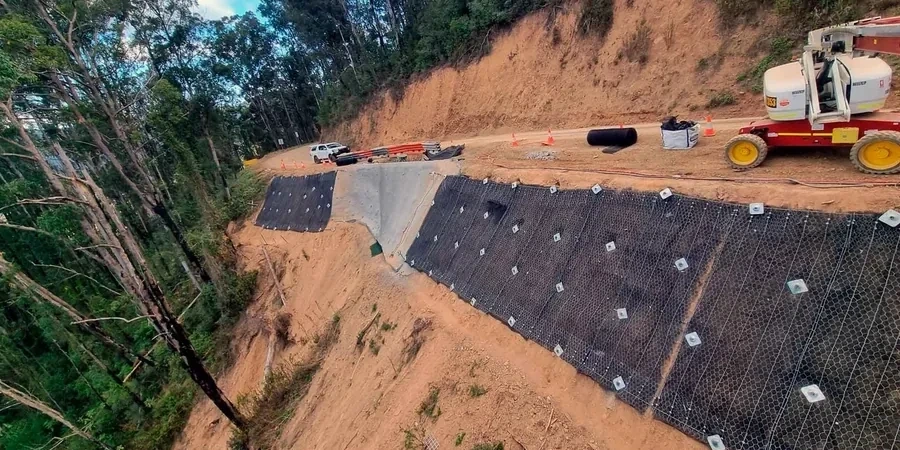
The necessity for expert slope engineering manifests across a wide spectrum of projects in the Portsmouth area. Coastal and harbour defence schemes frequently require the stabilisation of existing quay walls or the creation of new, resilient sea defence embankments. Inland, residential and commercial developments on the slopes of Portsdown Hill or other sloping sites demand robust cut-and-fill analyses and long-term stability verification. Infrastructure projects, such as the maintenance of railway cuttings for the Portsmouth Direct Line or highway widening along the M27, are critically dependent on preventing slope failure. For deeper-seated or surficial failures, a targeted remediation strategy, often involving the detailed specification of active/passive anchor design, provides a reliable method to reinforce the ground and secure the slope mass.
Common questions
What are the most common signs of slope instability I should look for on my property in Portsmouth?
Key indicators include the development of tension cracks in the ground, particularly near the crest of a slope, tilting fence posts or retaining walls, and the appearance of bulges at the slope's toe. Unexplained wet areas or saturated ground, even in dry weather, can signal a new drainage path. Internally, new or widening cracks in masonry and sticking doors or windows are often the first structural signs of ground movement affecting a building.
How does the local geology, particularly the chalk and clay, affect slope design in the Portsmouth area?
Portsmouth's geology presents two distinct challenges. The porous Chalk can be affected by solution features and requires careful drainage management to prevent softening. Conversely, the London Clay is highly susceptible to seasonal shrinkage and swelling, and its strength can dramatically decrease over time due to stress relief and water ingress. A thorough ground investigation is essential to characterise these materials and select the correct design parameters for a stable solution.
What is the general process for a slope stability assessment and design project?
The process begins with a phased ground investigation, including boreholes and laboratory testing, to build a detailed geotechnical model. This data is then used in limit equilibrium or numerical analyses, in accordance with Eurocode 7, to calculate the Factor of Safety for the slope. If this is below the required threshold, a remediation design is developed, which could involve drainage, regrading, or structural solutions like retaining walls or anchors, all detailed in a design package for construction.
Which UK standards are mandatory for the design of permanent slope stabilisation works?
The mandatory framework is Eurocode 7 (BS EN 1997-1 and -2), which sets out the principles for geotechnical design, used in conjunction with its UK National Annex. This is supported by BS 5930 for the code of practice for ground investigations. For any structural elements integrated into the slope, such as reinforced concrete retaining walls or steel anchors, the design must comply with the relevant material Eurocodes, namely Eurocode 2 (BS EN 1992) and Eurocode 3 (BS EN 1993).