Geotechnical laboratory testing forms the backbone of any robust ground investigation in Portsmouth, a city where the interaction between the built environment and the underlying geology demands rigorous scientific scrutiny. This category encompasses the full spectrum of physical and mechanical soil and rock testing procedures essential for characterising the engineering properties of the ground. From determining basic particle size distribution to assessing long-term settlement potential, these tests supply the quantitative data engineers rely on to design safe foundations, earthworks, and retaining structures. In a coastal city like Portsmouth, understanding the precise behaviour of local soils is not just a technical requirement but a fundamental necessity for mitigating risks associated with variable ground conditions and a high water table.
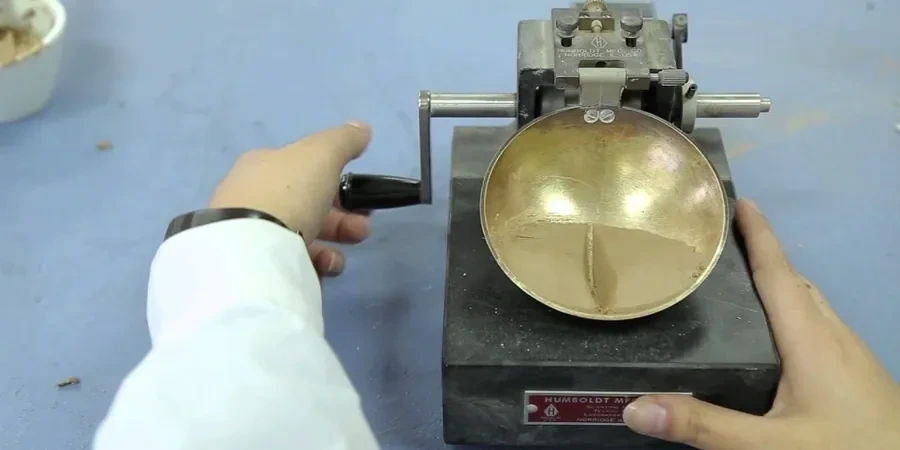
The local geology of Portsmouth presents a distinctive challenge, primarily defined by the presence of the London Clay Formation overlain by superficial deposits of Brickearth, river terrace gravels, and alluvium. The London Clay, a stiff, fissured, overconsolidated clay, is notorious for its shrink-swell potential and can be highly variable in its weathering profile. Overlying deposits, particularly the Brickearth, can be metastable and prone to collapse when saturated. A detailed grain size analysis is therefore critical for distinguishing between these silty, sandy, and clayey horizons, directly informing decisions on bearing capacity and drainage. Furthermore, the precise determination of an Atterberg limits is vital for assessing the plasticity and volumetric stability of the clay layers, which are key factors in foundation design across the city's many brownfield and coastal development sites.
All laboratory testing conducted for projects in Portsmouth must strictly adhere to the standards set out in the UK Specification for Ground Investigation, with BS 5930:2015+A1:2020 providing the overarching code of practice. Specific test procedures are governed by the BS 1377 suite of standards, which details methodologies for classification, compaction, and strength tests. Crucially, for projects involving earthworks, the Specification for Highway Works (Series 600) often dictates the required testing frequency and acceptance criteria. Accreditation from the United Kingdom Accreditation Service (UKAS) to ISO/IEC 17025 is the recognised benchmark for competence, ensuring that the results generated are reliable, repeatable, and defensible for regulatory submissions and design purposes.
The requirement for comprehensive laboratory testing spans a wide array of project types across Portsmouth and its surrounding areas. Major infrastructure schemes, such as the ongoing upgrades to the M27 and the redevelopment of the Tipner West super-peninsula, rely heavily on advanced triaxial and consolidation testing to validate ground models for large-scale earthworks and piled foundations. The city's thriving naval and commercial dockyards, including the historic Portsmouth Naval Base, necessitate precise chemical and geotechnical analysis for heavy-duty pavement design and the assessment of contaminated sediments. Equally, the booming residential sector, from high-rise developments in the city centre to smaller housing plots in areas like Hilsea, depends on routine classification and strength tests to satisfy warranty provider requirements and ensure the long-term stability of foundations against the prevalent shrinkable clay risk.
Common questions
What is the typical turnaround time for a standard geotechnical laboratory testing programme in Portsmouth?
Turnaround times depend entirely on the test suite and the soil type. Standard classification tests, such as moisture content and plasticity index determination, can often be reported within 3-5 working days of sample receipt. However, strength tests like undrained triaxial compression, which require a consolidation stage, or consolidation tests on London Clay, may take 2-3 weeks or longer to complete due to the low permeability of the material.
How are soil samples preserved and transported to the laboratory to ensure valid test results?
Sample integrity is paramount and governed by BS EN ISO 22475-1. High-quality undisturbed samples, typically taken in U100 tubes, must be sealed with wax and end caps immediately on site, stored upright, and protected from vibration and temperature extremes. Disturbed bulk samples for classification are sealed in heavy-duty polythene bags. A strict chain of custody is maintained, and samples are transported in padded boxes to minimise disturbance.
What UKAS accreditation should I look for in a geotechnical laboratory for a project in the UK?
You should verify that the laboratory holds UKAS accreditation to ISO/IEC 17025:2017 for the specific tests you are commissioning. The schedule of accreditation, available on the UKAS website, lists the exact test methods the lab is deemed competent to perform. This accreditation provides independent assurance of the technical validity of results and is typically a non-negotiable requirement for public sector, infrastructure, and warranty provider projects.
Can laboratory testing determine if a soil in Portsmouth is suitable for soakaway drainage?
Yes, a specific suite of tests is required to assess suitability for infiltration drainage, in line with BRE Digest 365. Key determinations include a particle size distribution to calculate the soil's coefficient of permeability, and often a falling head permeability test in the laboratory on a representative undisturbed sample. The results are used to confirm that the ground has sufficient infiltration capacity to manage the design storm event without causing waterlogging or instability.