Road geotechnics forms the essential foundation of all highway and transportation infrastructure projects across Portsmouth, encompassing the engineering behaviour of soils and rock materials beneath pavements, embankments, and earthworks. In a city defined by its island geography and dense urban fabric, understanding ground conditions is not merely a technical exercise but a critical determinant of long-term pavement performance, safety, and whole-life cost. This discipline integrates site investigation, laboratory testing, and advanced analysis to ensure that roads withstand traffic loading, environmental cycles, and the unique challenges posed by the local ground profile. For local authorities, developers, and civil engineering contractors, robust geotechnical input from the earliest planning stages prevents premature failures such as rutting, cracking, and differential settlement that can plague inadequately designed carriageways.
Portsmouth sits predominantly on a series of low-lying Quaternary deposits overlying the Upper Chalk Formation, with extensive areas of reclaimed land, former tidal flats, and artificial ground particularly concentrated around Portsea Island, the naval base, and the expanding residential zones of Cosham and Hilsea. These conditions present a complex geotechnical mosaic: soft alluvial clays and silts exhibit low bearing capacity and high compressibility, while made ground often contains heterogeneous fill materials with unpredictable engineering properties. The underlying chalk varies from structureless weak rock to structured high-density material, introducing risks of dissolution features and variable depth to competent bearing strata. Groundwater levels are tidally influenced across much of the city, demanding rigorous assessment of drainage and subgrade moisture susceptibility in any road design.
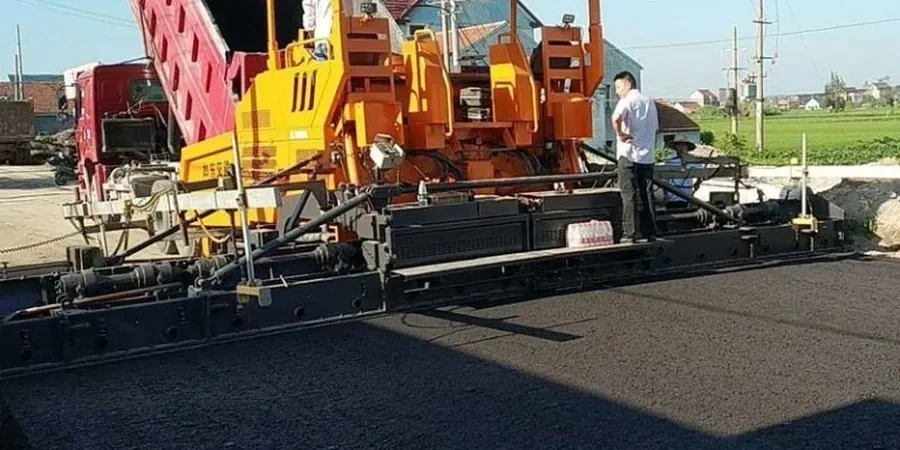
All geotechnical aspects of road construction in the UK must comply with the Specification for Highway Works (SHW) Series 600, the Design Manual for Roads and Bridges (DMRB), and Eurocode 7 (BS EN 1997) with its UK National Annex. The DMRB CD 225 provides specific guidance on capping and subgrade assessment, while CD 226 governs pavement foundation design. Portsmouth City Council, as the local highway authority, typically adopts these national standards alongside supplementary local technical requirements for adoptable roads, particularly concerning the treatment of soft ground and verification of long-term subgrade stiffness. Site investigations must follow BS 5930, with laboratory testing aligned to BS 1377 methods, ensuring that parameters used in design are defensible and traceable.
The range of projects demanding geotechnical expertise spans from major strategic routes like the M27 and A27 corridors, where flexible pavement design must accommodate heavy commercial traffic over variable ground, to local residential estate roads requiring cost-effective treatment of weak subgrades. Urban regeneration schemes on brownfield sites frequently necessitate CBR study for road design to establish reliable stiffness values where historical fills exist. Industrial access roads serving the port and dockyard areas often justify rigid pavement design solutions where ground conditions risk differential settlement under concentrated loading. Each project type demands a tailored geotechnical approach, from preliminary desk studies and intrusive investigations through to interpretive reporting and construction validation testing.
Common questions
What are the most common geotechnical risks for road construction in Portsmouth?
The predominant risks include soft compressible alluvial clays and silts causing settlement, variable artificial ground from historical land reclamation, shallow groundwater with tidal influence, and dissolution features in the underlying chalk. These conditions can lead to differential settlement, subgrade weakening, and pavement failure if not properly identified during site investigation and mitigated through appropriate foundation design or ground treatment.
Which UK standards govern geotechnical investigations for highway projects?
Geotechnical investigations must follow BS 5930 (Code of practice for ground investigations), with laboratory testing performed to BS 1377. Pavement foundation design references the DMRB CD 225 and CD 226, while overall geotechnical design complies with Eurocode 7 (BS EN 1997) and its UK National Annex. The Specification for Highway Works Series 600 covers earthworks execution on site.
How does the local geology affect pavement design in Portsmouth?
Portsmouth's geology, dominated by Quaternary deposits over chalk with extensive made ground, directly influences subgrade stiffness and long-term pavement behaviour. Soft alluvial soils require thicker capping layers or stabilisation, while variable artificial ground demands rigorous CBR assessment. Chalk subgrades need careful handling to prevent frost heave and softening, impacting the choice between flexible and rigid pavement solutions.
When is a CBR study necessary for a road project in the Portsmouth area?
A CBR study is essential whenever subgrade strength must be quantified for pavement thickness design, particularly on greenfield sites, brownfield redevelopments with unknown fill materials, or areas of soft alluvium. It is required to determine the subgrade stiffness class per DMRB CD 225, enabling engineers to specify appropriate capping and sub-base layers that prevent structural failure under traffic loading.