Portsmouth's marine climate doesn't just corrode steel—it directly affects how the local clay behaves under load. With an average annual rainfall above 700 mm and a shallow groundwater table across much of Portsea Island, the fine-grained soils here are often at or near saturation. That means plasticity isn't just a lab figure; it's the difference between a stable foundation and one that heaves after the first wet winter. For any site from Hilsea to Southsea, running Atterberg limits early in the investigation flags expansive potential before it becomes a structural problem. We see this regularly when reviewing borehole logs alongside grain-size data—the combination reveals whether you're dealing with a low-plasticity silt or a high-plasticity London Clay derivative that will require serious ground preparation.
A plasticity index above 25 in Portsmouth's saturated clays means you're almost certainly in the high-volume-change zone—design your foundations accordingly.
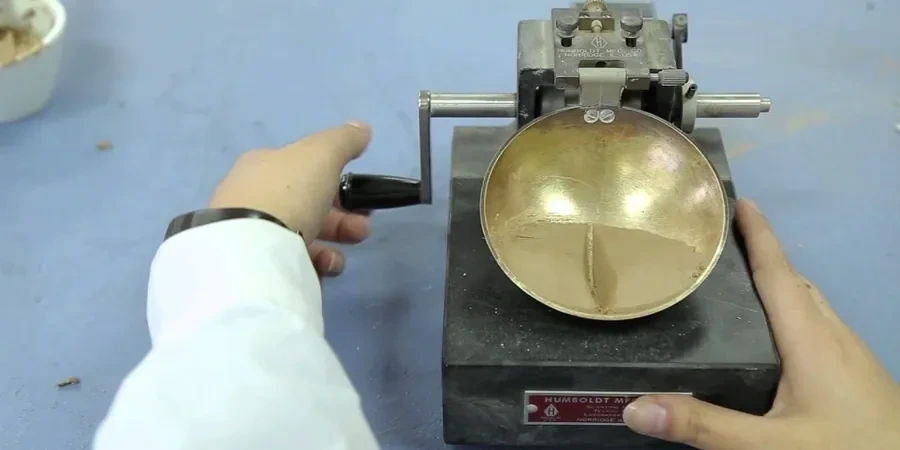
Process overview
Local context
One thing we've learned from years of testing Portsmouth soils: a plasticity chart alone won't save you from a bad call if the sample was taken from a desiccated crust. In the summer months, the top metre of clay across the city can be stiff and fissured, giving a deceptively low natural water content. Come November, that same material absorbs water and swells, pushing PI values to their true range. Contractors who skip the Atterberg determination and rely solely on SPT N-values from dry-weather investigations often under-design for the wet-season reality. The risk is particularly acute for lightly loaded strip footings on the expansive clays found near the chalk interface in the Paulsgrove area. A quick set of limits tests costs a fraction of what it takes to underpin a cracked wall.
Relevant standards
BS EN ISO 17892-12:2018, BS 5930:2015 + A1:2020, Eurocode 7 – BS EN 1997-2:2007
Additional services
Full Atterberg Suite
LL, PL, PI and liquidity index determination on disturbed samples, reported with Casagrande plasticity chart classification per BS 5930.
Shrinkage Limit Testing
Linear and volumetric shrinkage for earthworks and landfill liner specification, following BS 1377-2 procedures.
One-Point Liquid Limit
Rapid screening method for projects where budget or sample volume is limited; correlated against full multi-point calibration curves.
Combined Classification Package
Atterberg limits plus PSD by wet sieving and hydrometer, giving a complete BS 5930 soil group symbol for your factual report.
Typical parameters
Common questions
How much does Atterberg testing cost per sample in Portsmouth?
For standard liquid and plastic limit determination, expect to budget between £50 and £80 per sample when processed within our accredited Portsmouth lab. The exact figure depends on whether you need the full suite including linear shrinkage, the number of samples in the batch, and the required turnaround time. We'll quote a firm price once we know the project scope.
What sample quantity do you need for a reliable Atterberg test?
We typically ask for at least 300 grams of disturbed material passing the 425 μm sieve. For samples with significant coarse fraction, send a larger bag—around 1 kg—so we can sieve and still have enough fines for both the liquid and plastic limit procedures without reusing material.
Can you use Atterberg results to estimate undrained shear strength?
Yes, indirectly. By combining the liquidity index from your Atterberg data with established correlations—such as those published by Leroueil or the Norwegian Geotechnical Institute—our team can supply an estimated undrained shear strength range. It's not a replacement for triaxial testing, but it's useful during preliminary design phases when undisturbed samples are scarce.