Seismic engineering in Portsmouth is a critical discipline that addresses the city's vulnerability to earthquake-induced ground motion, even though the UK is often perceived as a low-seismicity region. This category encompasses a comprehensive suite of solutions designed to assess, mitigate, and manage seismic risk across the built environment, from historic naval structures to modern residential developments. Given Portsmouth's dense urban fabric, strategic coastal infrastructure, and legacy building stock, understanding how the ground and structures respond to shaking is not merely academic—it is a fundamental requirement for public safety and long-term resilience. The core objective is to translate site-specific hazard assessments into practical design and retrofitting strategies that comply with national standards and protect both life and property.
The local geology of Portsmouth plays a pivotal role in shaping its seismic response. The city is underlain by a complex sequence of Quaternary deposits, including raised beach deposits, brickearth, and alluvium, overlying the chalk bedrock of the Portsdown Chalk Formation. These superficial deposits, particularly the saturated silts and sands found in coastal and reclaimed areas, are highly susceptible to amplification of ground motion and, critically, to soil liquefaction analysis. The presence of a shallow water table in many parts of the city, including the dockyard environs and Southsea, exacerbates the liquefaction hazard, making it a primary consideration for any major construction project. A thorough understanding of this stratigraphy is the starting point for any meaningful seismic assessment.
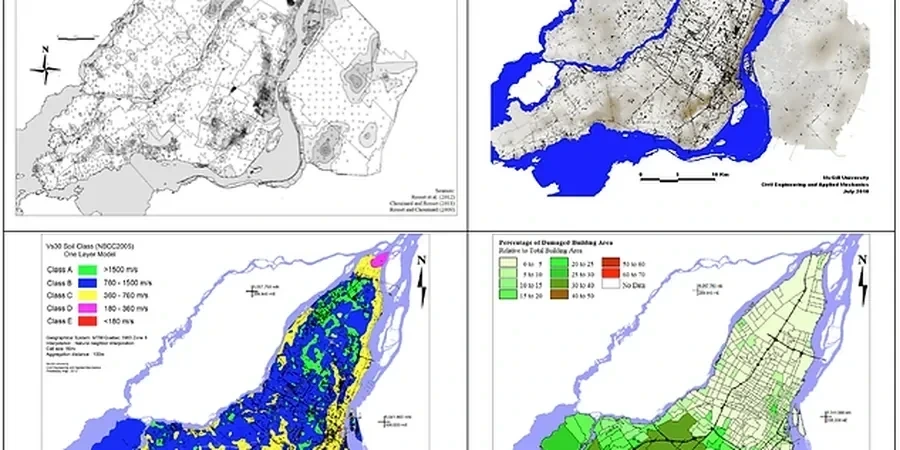
The regulatory framework governing seismic design in Portsmouth is rooted in the British Standards, specifically BS EN 1998-1:2004 (Eurocode 8: Design of structures for earthquake resistance), which is implemented through its UK National Annex. Although the UK is classified as a very low seismicity area, Eurocode 8 mandates that structures in importance classes II, III, and IV must be designed or assessed for a reference peak ground acceleration. For Portsmouth, this typically corresponds to a design value of 0.02g to 0.04g for a 475-year return period, but site-specific studies are often required to account for amplification effects. This regulatory context makes solutions like seismic microzonation essential, as they refine the generic code-based hazard into a detailed, locally accurate ground motion map that informs planning and design decisions.
The types of projects that demand these specialised seismic solutions are diverse and growing. Major infrastructure works, such as the upgrades to Portsmouth International Port or the redevelopment of the dockyard, require detailed seismic hazard assessments to ensure operational continuity after an event. High-rise residential blocks along the seafront, often founded on problematic ground, necessitate advanced analysis to prevent differential settlement and structural distress. Furthermore, the conservation and retrofitting of historic assets, including the Victorian forts and the Spinnaker Tower's ancillary structures, benefit immensely from modern base isolation seismic design techniques, which can be subtly integrated to enhance resilience without compromising heritage value. Any project involving a basement excavation or deep foundation in areas with a high water table will also trigger the need for rigorous liquefaction assessment.
Common questions
Why is seismic engineering necessary in Portsmouth if the UK is not a high-risk earthquake zone?
While the UK experiences low seismicity, Portsmouth's geology and infrastructure profile elevate the risk. Soft soils can amplify ground motion, and the presence of critical naval and civil infrastructure demands a high level of resilience. Eurocode 8 mandates seismic design for important structures, making assessment essential for safety, insurance, and regulatory compliance, not just for extreme events.
What is the main seismic hazard facing new developments in Portsmouth's coastal areas?
The primary hazard is soil liquefaction, where saturated sandy soils lose strength and behave like a liquid during shaking. This is prevalent in reclaimed land and areas with a high water table, such as near the harbour and Southsea. It can cause catastrophic foundation failure, differential settlement, and lateral spreading, making site-specific analysis mandatory for most developments.
How does seismic microzonation differ from the standard seismic hazard given in the UK National Annex?
The UK National Annex provides a generic peak ground acceleration for a region. Seismic microzonation refines this by mapping local variations in ground response due to specific soil types, depth to bedrock, and topography. For Portsmouth, this means identifying areas where soft alluvium amplifies shaking, providing a much more accurate and often higher design acceleration for a specific site than the code baseline.
When is base isolation considered a viable solution for a project in Portsmouth?
Base isolation is typically considered for new, high-importance structures like hospitals or emergency response centres, or for the sensitive retrofitting of historic landmarks where conventional strengthening would be too intrusive. It decouples the structure from ground motion, dramatically reducing seismic forces. The decision is driven by a cost-benefit analysis weighing the enhanced performance and damage reduction against the initial investment.